
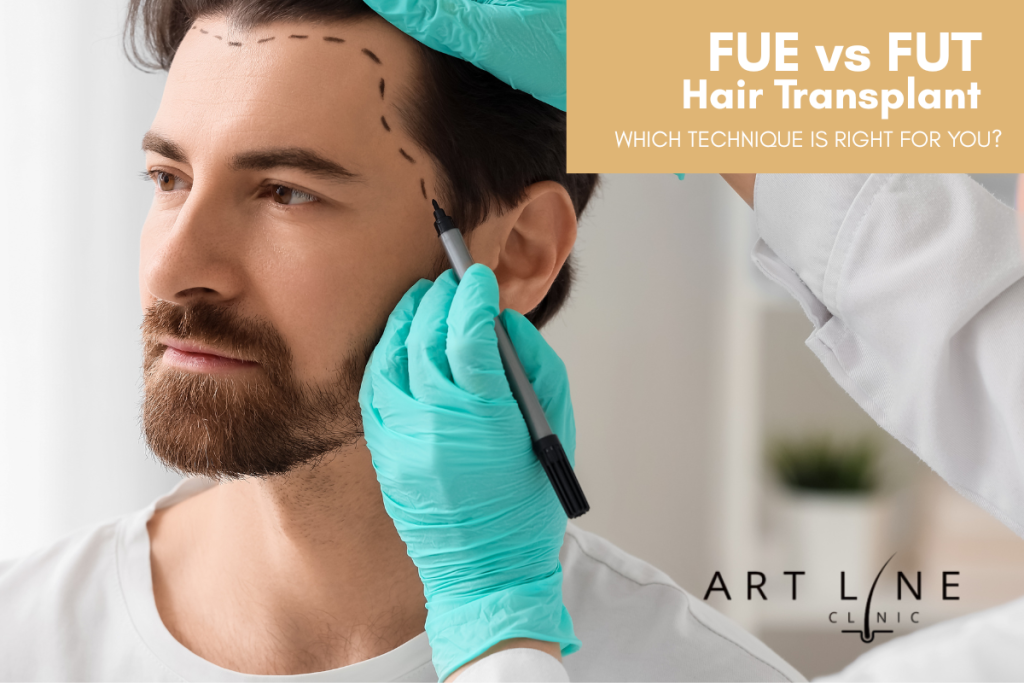
Choosing to undergo a hair transplant is a major step toward restoring confidence and improving appearance. However, one of the most common questions patients ask is: Which hair transplant technique is better—FUE or FUT?
Both Follicular Unit Extraction (FUE) and Follicular Unit Transplantation (FUT) are proven techniques used worldwide. Each method has its own advantages, limitations, and ideal candidates.
In this guide, we’ll break down the differences between FUE and FUT, explain how each works, and help you understand which option may be best for your hair restoration goals.
Overview: What Are FUE and FUT?
Both techniques involve transplanting healthy hair follicles from a donor area to areas of hair loss. The difference lies in how the follicles are harvested.
- FUE removes individual follicular units directly from the scalp
- FUT removes a thin strip of scalp from which follicles are extracted
If you’re new to hair transplantation, we recommend first reading “What Is a Hair Transplant and How Does It Work?” for a complete overview of the procedure.
What Is FUE Hair Transplant?
Follicular Unit Extraction (FUE) is a modern technique where individual hair follicles are extracted one by one using specialized micro-punch tools.
Advantages of FUE
- No linear scar
- Faster healing
- Ideal for short hairstyles
- Minimal discomfort
Limitations of FUE
- Typically more time-consuming
- May yield fewer grafts in a single session
- Often higher cost due to precision required
FUE is popular among patients seeking a less invasive approach and discreet recovery.
What Is FUT Hair Transplant?
Follicular Unit Transplantation (FUT) involves removing a thin strip of scalp from the donor area. Hair follicles are then extracted from this strip and transplanted individually.
Advantages of FUT
- Allows for a high number of grafts
- Efficient for advanced hair loss
- Often more cost-effective
Limitations of FUT
- Linear scar (usually hidden by hair)
- Slightly longer recovery
- Not ideal for very short hairstyles
FUT is often recommended for patients needing maximum coverage in a single procedure.
FUE vs FUT: Key Differences
| Feature | FUE | FUT |
|---|
| Scarring | Tiny dot scars | Linear scar |
| Recovery Time | Faster | Slightly longer |
| Graft Volume | Moderate | High |
| Ideal Hair Length | Short or long | Medium to long |
| Procedure Time | Longer | Shorter |
Which Technique Is Right for You?
The best technique depends on:
- Degree of hair loss
- Donor hair availability
- Hairstyle preferences
- Budget
- Long-term goals
A professional evaluation is essential to determine which method will deliver the most natural and effective result.
Can Both Techniques Be Combined?
In some cases, combining FUE and FUT can maximize graft yield and long-term coverage. This approach is especially beneficial for patients with extensive hair loss.
Final Results: Are They Different?
Both FUE and FUT produce natural, permanent results when performed correctly. The difference lies mainly in extraction method, not outcome quality.
The key factor is the experience of the medical team and proper planning.
Not sure whether FUE or FUT is right for you?
Book a consultation at Artline Hair Clinic and receive a customized hair restoration plan designed by specialists.