
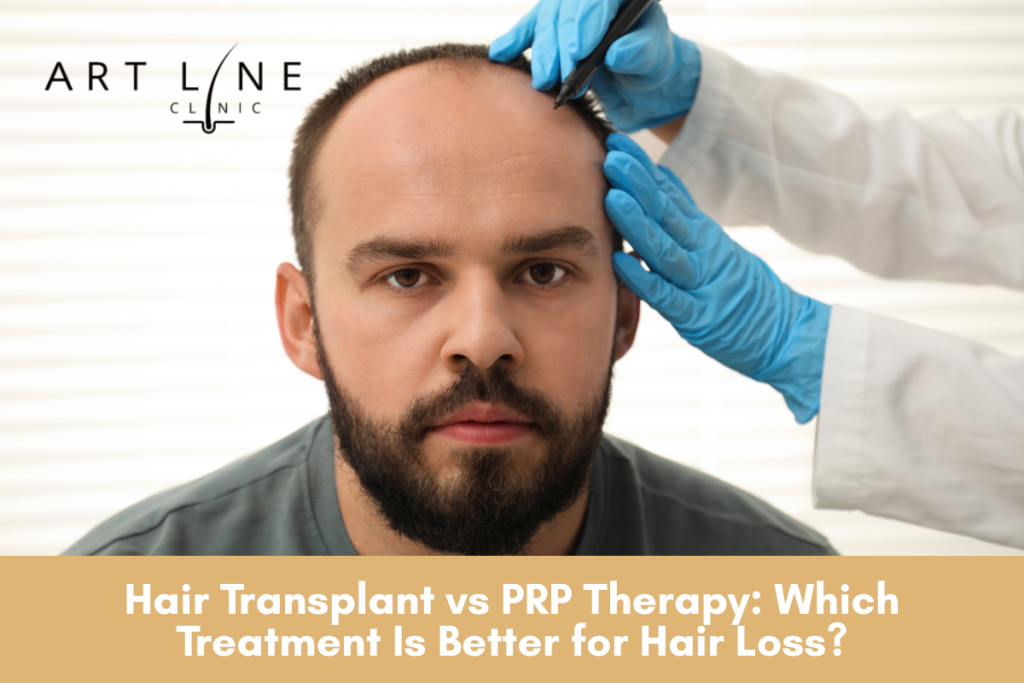
Hair loss treatments have advanced significantly in recent years. Among the most commonly discussed solutions are hair transplantation and PRP therapy (Platelet-Rich Plasma). Both treatments aim to address hair thinning, but they work in very different ways.
Many patients considering hair restoration wonder which option provides better results. The answer depends on several factors, including the cause of hair loss, the stage of thinning, and the patient’s long-term goals.
In this article, we compare hair transplant vs PRP therapy, explaining how each treatment works, their advantages, and when one option may be more suitable than the other.
If you are new to hair restoration, start with What Is a Hair Transplant and How Does It Work? for a full overview of the procedure.
What Is PRP Therapy for Hair Loss?
PRP (Platelet-Rich Plasma) therapy is a non-surgical treatment that uses the patient’s own blood to stimulate hair growth.
The process involves:
- Drawing a small amount of blood
- Processing it in a centrifuge to isolate platelet-rich plasma
- Injecting the PRP into areas of thinning hair on the scalp
Platelets contain growth factors that may stimulate dormant hair follicles and improve scalp health.
PRP is typically performed in multiple sessions over several months.
What Is a Hair Transplant?
A hair transplant is a surgical procedure that moves healthy hair follicles from the donor area (usually the back of the scalp) to areas affected by hair loss.
Once transplanted, these follicles continue growing naturally in their new location.
Two common techniques include:
- FUE (Follicular Unit Extraction)
- FUT (Follicular Unit Transplantation)
Learn more in FUE vs FUT Hair Transplant: Which Technique Is Right for You?
Key Differences Between Hair Transplant and PRP
| Feature | Hair Transplant | PRP Therapy |
|---|---|---|
| Procedure Type | Surgical | Non-surgical |
| Goal | Restore hair in bald areas | Stimulate existing follicles |
| Results | Permanent hair growth | Temporary improvement |
| Sessions Required | Usually one procedure | Multiple sessions |
| Best For | Moderate to advanced hair loss | Early thinning |
When PRP Therapy May Be Recommended
PRP therapy may benefit patients who:
- Have early hair thinning
- Still have active hair follicles
- Want a non-surgical treatment option
- Are seeking preventative care
However, PRP cannot create new hair follicles in areas where hair has already been lost.
When a Hair Transplant Is the Better Solution
Hair transplantation is typically recommended when:
- Hair loss is advanced
- Bald areas are already present
- Long-term restoration is desired
Because transplanted follicles come from genetically resistant areas, results are generally permanent.
Learn more about long-term outcomes in Is a Hair Transplant Permanent? Results, Longevity, and Maintenance.
Can PRP and Hair Transplants Be Combined?
Yes. In some cases, PRP therapy may be used alongside a hair transplant to support healing and potentially improve graft survival.
Combination treatments can enhance overall results when recommended by specialists
Which Treatment Is Right for You?
Choosing between PRP therapy and a hair transplant depends on:
- Stage of hair loss
- Hair density in donor areas
- Patient goals
- Long-term restoration planning
A professional evaluation helps determine the most appropriate treatment plan.
Final Thoughts
PRP therapy and hair transplantation serve different purposes in hair restoration. PRP can help stimulate thinning hair, while hair transplantation restores lost follicles permanently.
The best approach depends on each patient’s unique hair loss pattern and expectations.
Not sure which hair loss treatment is right for you?
Schedule a consultation with Artline Hair Clinic and receive a personalized hair restoration plan.