
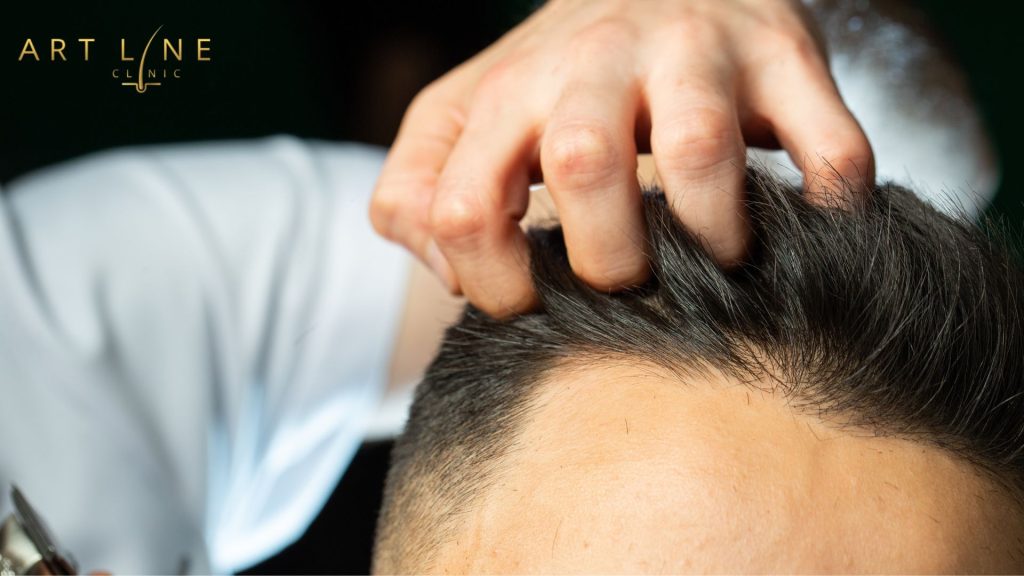
Hair transplant density is one of the most important factors influencing the final appearance of a hair restoration procedure. It refers to how closely hair grafts are placed in the recipient area and how much visual coverage is achieved.
While many patients focus on the number of grafts, density plays an equally critical role in determining whether the final result looks natural, balanced, and aesthetically successful.
What Is Hair Transplant Density?
Hair transplant density describes the number of hair follicles implanted per square centimeter of scalp.
It affects:
- Visual fullness of the hair
- Naturalness of the hairline
- Coverage in thinning areas
- Overall aesthetic outcome
Higher density does not always mean better results. The goal is strategic distribution, not maximum packing.
Why Density Matters in Hair Transplantation
Density directly influences how the hair appears after healing.
If density is too low:
- The scalp may still appear visible
- Coverage may look sparse
- The result may seem incomplete
If density is too high:
- Blood supply to grafts may be compromised
- Graft survival may decrease
- Natural hair direction may be harder to replicate
The ideal density balances aesthetics with biological safety.
Natural Hair Is Not Uniform
One of the most important principles in hair transplantation is that natural hair density is uneven.
For example:
- The hairline naturally has lower density for softness
- Mid-scalp areas have moderate density
- The crown may vary significantly depending on genetics
A good transplant replicates these natural variations rather than applying uniform density.
Donor Area Limitations
Density planning depends heavily on the donor area, usually located at the back and sides of the scalp.
Key factors include:
- Donor hair thickness
- Total available grafts
- Donor density per cm²
- Long-term donor preservation
Overharvesting the donor area to achieve high density can negatively affect future options.
Recipient Area Blood Supply
The scalp must support transplanted grafts through blood circulation.
If density is too high in a small area:
- Grafts may compete for nutrients
- Healing may be compromised
- Survival rates can decrease
This is why surgeons carefully control spacing and placement.
Density and Hairline Design
The hairline is one of the most visible and delicate areas.
Here, density is typically lower at the very front to:
- Mimic natural softness
- Avoid an artificial “plugged” appearance
- Create a gradual transition into thicker areas
Behind the hairline, density gradually increases for a natural gradient.
Does Higher Density Always Look Better?
Not necessarily.
A successful hair transplant depends on:
- Proper distribution
- Angle and direction of grafts
- Hair caliber (thickness)
- Facial proportions
Even moderate density can look extremely natural if placed strategically.
Factors That Influence Ideal Density
The appropriate density varies based on:
- Extent of hair loss
- Quality of donor hair
- Scalp elasticity
- Patient age
- Future hair loss risk
- Desired hairstyle and coverage
Each case requires individualized planning.
Long-Term Impact of Density Choices
Density decisions affect not only immediate results but also long-term appearance.
Properly planned density ensures:
- Stable coverage over time
- Natural aging of the hairline
- Flexibility for future procedures if needed
- Balanced visual density as native hair continues to thin
Poor planning may lead to unnatural patterns or limited future options.
Final Thoughts
Hair transplant density is a key factor in determining the success of a hair restoration procedure, but it must be carefully balanced with donor limitations, blood supply, and natural hair patterns. The best results are not always the densest, but the most natural and strategically planned.
At Art Line Hair Clinic, density is designed with precision and artistic planning to ensure natural-looking hairlines, optimal graft survival, and long-term aesthetic harmony tailored to each patient’s unique hair characteristics.