
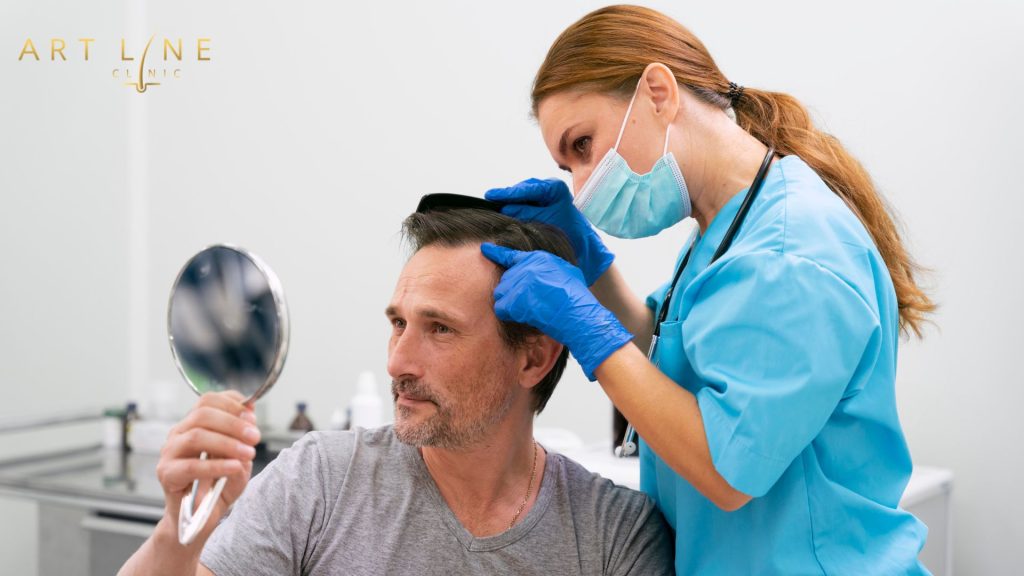
A hair transplant can be an effective solution for people experiencing permanent hair loss, but not everyone is an ideal candidate. The success of a hair restoration procedure depends on several factors, including the cause and pattern of hair loss, the quality of the donor area, overall health, and realistic expectations.
Understanding these factors before scheduling a procedure can help patients make informed decisions and determine whether hair transplantation is an appropriate option for their situation.
At Art Line Hair Clinic, a thorough evaluation is an important part of the treatment process. Rather than simply counting the number of grafts available, a qualified specialist should evaluate the patient’s hair loss pattern, donor area, scalp condition, and long-term goals.
What Makes Someone a Good Hair Transplant Candidate?
In general, a good candidate has a form of hair loss that can be effectively treated with transplantation and enough healthy donor follicles to create natural-looking coverage.
Important factors include:
- A stable or predictable pattern of hair loss
- Adequate donor hair density
- Healthy hair follicles
- A healthy scalp
- Realistic expectations
- Good overall health
- A clear understanding of the procedure and recovery process
However, candidacy is highly individual. Two people with similar degrees of baldness may have very different treatment options depending on their donor areas and the characteristics of their hair.
1. Understanding the Cause of Hair Loss
Before considering a transplant, it is important to determine why the hair is falling out.
Hair loss can have many causes, including:
- Male pattern hair loss
- Female pattern hair loss
- Certain forms of alopecia
- Hormonal changes
- Nutritional deficiencies
- Medical conditions
- Medications
- Scalp disorders
- Physical or emotional stress
Hair transplantation works by relocating healthy follicles from one area of the scalp to another. It does not treat every underlying cause of hair loss.
For this reason, identifying the cause is an important first step.
2. Your Hair Loss Pattern Matters
The distribution of hair loss can significantly influence whether transplantation is appropriate.
Patients with a predictable pattern of permanent hair loss may be particularly suitable for transplantation because the surgeon can plan where grafts should be placed based on the current and anticipated pattern.
For example, some patients may primarily have:
- A receding hairline
- Temple recession
- Crown thinning
- Diffuse thinning
- More extensive frontal loss
The pattern determines how the available donor hair can be distributed.
3. The Donor Area Is Critical
The donor area is the region of the scalp from which follicles are extracted during a transplant.
Typically, follicles are taken from areas that are more resistant to androgenetic hair loss, particularly the sides and back of the scalp.
The quality of this area is one of the most important factors in determining candidacy.
A specialist may evaluate:
- Hair density
- Follicle quality
- Hair shaft thickness
- Distribution of follicles
- Available donor supply
- Previous procedures or scarring
Having a strong donor area provides more options for achieving adequate coverage.
4. Hair Thickness Can Influence the Appearance of Density
The number of grafts is not the only factor that determines how dense transplanted hair will appear.
Hair shaft characteristics also matter.
Thicker hair can provide greater visual coverage, while finer hair may require more careful graft placement to create the desired appearance.
Hair texture, curl, and contrast between the hair and scalp can also influence the visual result.
This is why a personalized assessment is more useful than simply comparing graft numbers between patients.
5. Your Hair Loss Should Be Evaluated Long Term
A transplant does not stop the progression of genetic hair loss in follicles that were not transplanted.
This is an important consideration when planning surgery.
A patient may currently have a relatively small area of hair loss but could experience additional thinning in the future.
A responsible treatment plan therefore considers:
- Current hair loss
- Potential future progression
- Donor hair availability
- Hairline design
- Long-term graft conservation
The goal is not simply to create density today, but to develop a sustainable restoration strategy.
6. Age Can Be a Factor
There is no single age at which everyone should have a hair transplant.
However, younger patients with rapidly progressing hair loss may need additional evaluation before surgery.
Performing a transplant too early can make long-term planning more difficult if significant native hair continues to disappear.
In some cases, a specialist may recommend monitoring the progression of hair loss or considering medical treatment before proceeding with surgery.
Age is therefore considered alongside the stability and pattern of hair loss rather than used as the only measure of candidacy.
7. Your Scalp Should Be Healthy
A healthy scalp provides a better environment for hair restoration.
Conditions such as active inflammation, infection, or certain scalp disorders may need to be addressed before transplantation.
During an evaluation, a specialist may examine the scalp for signs of:
- Inflammation
- Irritation
- Infection
- Excessive scaling
- Scarring
- Other dermatological conditions
Treating an underlying scalp problem may be necessary before proceeding.
8. Overall Health Matters
Hair transplantation is a surgical procedure, so general health should also be considered.
Certain medical conditions, medications, or uncontrolled health problems may affect whether someone is an appropriate candidate or may require additional precautions.
A medical evaluation helps identify factors that could influence:
- Healing
- Bleeding risk
- Anesthesia
- Medication use
- Recovery
Patients should provide their healthcare team with an accurate medical history before undergoing a procedure.
9. Realistic Expectations Are Essential
A good candidate should understand what a hair transplant can and cannot accomplish.
A transplant can redistribute existing hair follicles, but it cannot create an unlimited supply of new follicles.
The number of available donor grafts is finite.
This means that treatment goals need to be realistic and based on the patient’s available donor supply.
A natural-looking result is generally more important than simply maximizing the number of grafts used.
10. You Should Understand the Recovery Process
Being a good candidate also means being prepared for the recovery period.
After a transplant, patients may experience temporary:
- Redness
- Swelling
- Scabbing
- Sensitivity
- Temporary shedding
The transplanted follicles also go through a growth cycle before producing mature hair.
Understanding this process can help patients maintain realistic expectations during recovery.
Can Someone With Advanced Hair Loss Get a Hair Transplant?
Advanced hair loss does not automatically rule out transplantation.
However, extensive baldness may limit the amount of coverage that can realistically be achieved because the donor supply is finite.
In these cases, the surgeon may need to prioritize certain areas, such as the frontal hairline and mid-scalp.
The patient’s hair characteristics and donor density also become particularly important.
What If You Have Diffuse Hair Loss?
Diffuse thinning can require a more careful evaluation.
If hair loss affects both the areas intended for transplantation and the potential donor area, the specialist must determine whether enough stable follicles are available.
A diagnosis is particularly important because diffuse thinning can have different causes.
Not every type of diffuse hair loss should be treated with transplantation.
What Happens During a Hair Transplant Evaluation?
A professional consultation should go beyond simply looking at photographs.
Depending on the clinic and the patient’s situation, an evaluation may include:
- Reviewing the patient’s medical and hair-loss history.
- Examining the scalp and hair pattern.
- Assessing donor hair density and quality.
- Identifying the likely cause of hair loss.
- Discussing realistic treatment goals.
- Estimating the number of grafts that may be appropriate.
- Developing a long-term treatment strategy.
This information allows the specialist to determine whether transplantation is appropriate and which approach may be most suitable.
What If You Are Not a Candidate Yet?
Not being an immediate candidate does not necessarily mean that hair restoration is impossible.
Depending on the cause of hair loss, a specialist may recommend addressing an underlying condition, monitoring hair loss, or considering medical treatments that can help preserve existing hair.
The appropriate approach depends on the individual diagnosis.
In some cases, delaying surgery until the hair loss pattern becomes clearer can lead to better long-term planning.
Why Individualized Planning Matters
There is no universal number of grafts or single hair transplant design that works for everyone.
Factors such as hair density, follicle characteristics, scalp condition, facial proportions, hairline shape, and future hair loss all influence the treatment plan.
A personalized approach allows the surgeon to use the available donor hair strategically while maintaining a natural appearance.
Final Thoughts
A good hair transplant candidate typically has a treatable form of permanent hair loss, sufficient donor hair, a healthy scalp, appropriate overall health, and realistic expectations. However, candidacy cannot be determined by age or the degree of baldness alone. A professional evaluation is necessary to understand the cause of hair loss, assess donor supply, and develop a long-term restoration strategy.
At Art Line Hair Clinic, each hair transplant begins with an individualized evaluation of the patient’s hair loss pattern, donor area, and restoration goals. If you are considering a hair transplant in Mexico, a consultation can help determine whether you are a suitable candidate and what approach may best fit your needs.